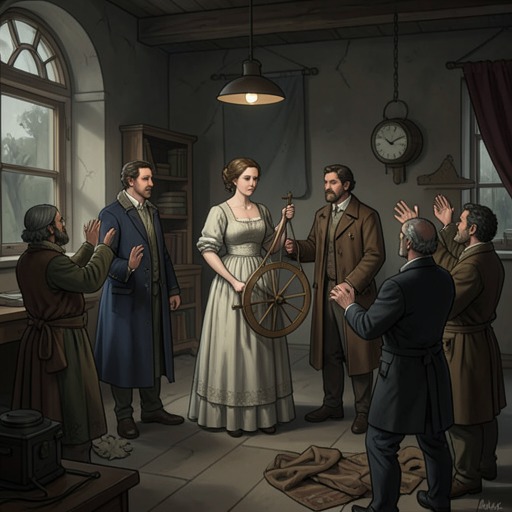
Tarot
The LuminariesTarot is presented as a pattern-based practice associated with dreams and fortune-telling. In the novel, it links Emery Staines’s incomplete recollections during his recovery with Anna Wetherell’s attempt to prepare for work at the Wayfarer’s Fortune. Its significance lies in that contrast: the patterns arrive first as elusive dream material, then as something Anna studies for a practical future.
Dreams and Staines’s memory
During his recovery, Staines can recall little of the weeks he was missing. His memories are incomplete, made up of dreamlike impressions, sensations, and brief flashes of light; he cannot remember boarding a ship or experiencing a shipwreck. Among the images he does remember are nightly dreams about Tarot patterns, alongside gold-lined corsets and a fortune hidden in a flour sack beneath a bed. Tarot is thus part of a confused cluster of images that joins imagined wealth to his uncertain recollection, rather than a clear account of what happened to him.
Anna’s study of fortune-telling
Anna later explains that, when Lydia Wells arrived in town, she took Anna in at the Wayfarer’s Fortune. Anna began learning Tarot and astral charts because she hoped to assist Lydia in telling fortunes and earn a living. She had not planned on this work when she left her former employment: she did not know Lydia was coming before her arrival. Her study of Tarot emerges from a contingent offer of shelter and a need to find a livelihood, not from a previously stated vocation.
Narrative significance
The novel gives Tarot two distinct functions without confirming that it predicts events. For Staines, it belongs to the dreamlike fragments through which a lost period returns only partially; for Anna, it becomes a skill she hopes to turn into paid work. The contrast makes the same system of patterns both an image within uncertain memory and a practical instrument for imagining a different future.